
“Your home is the most personal canvas you will ever have. Whether you lean toward the serene simplicity of Scandinavian minimalism or the bold opulence of Art Deco, understanding the world’s most iconic interior design styles is the first step to creating a space that truly feels like you.“
Table of Contents
- Midcentury Modern
- Scandinavian
- Japandi
- Minimalist
- Bohemian
- Art Deco
- Traditional
- Maximalist
- Coastal
- Farmhouse
- Industrial / Neo-Industrial
- Mediterranean
- Transitional
- Contemporary
- Eclectic
Interior design is ultimately about shaping the personality of your home. Much like fashion, interior decorating styles go far beyond the basics; some are rooted in specific time periods, others are influenced by geography and culture. As celebrated designer Nate Berkus once observed, “The best design projects were the ones where people broke all the rules.” With that spirit in mind, let’s explore 15 iconic styles that continue to define modern home aesthetics today.
The 15 Iconic Interior Design Styles
Midcentury Modern
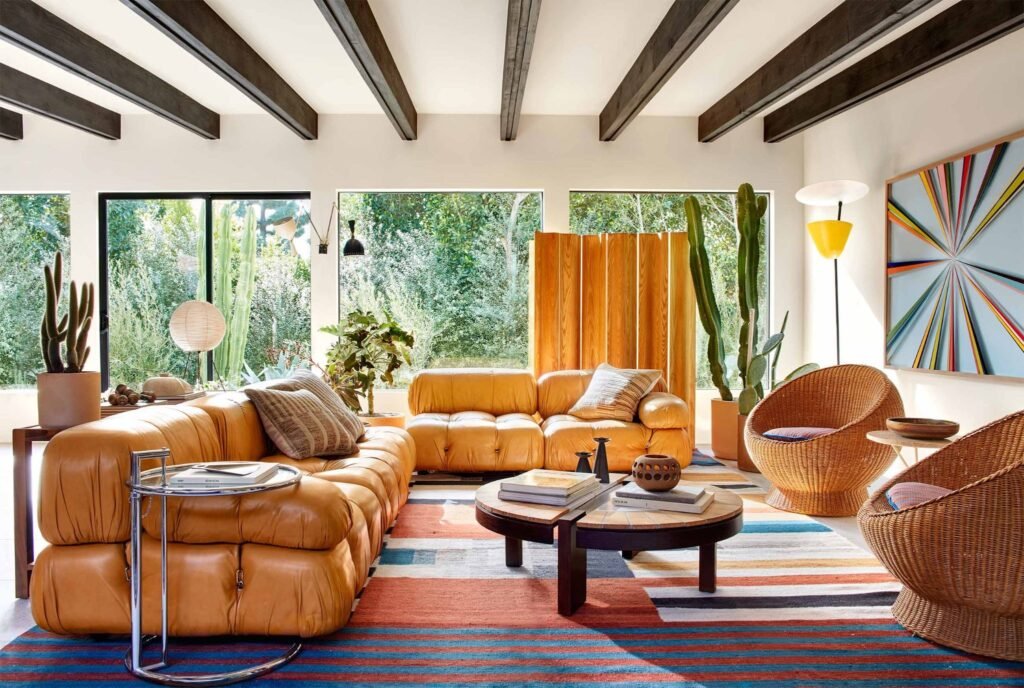
Spanning roughly from the mid-1940s to the early 1970s, midcentury modern design remains one of the most recognizable and beloved styles in American interior history. Pioneered by architects like Frank Lloyd Wright, this style blends organic forms with clean geometric lines, celebrating the marriage of function and beauty in a postwar world full of optimism.
Warm wood paneling, tapered furniture legs, open floor plans, and a subtle Japanese influence (visible in folding screens and sliding panels) are all hallmarks of this look. The color palette for home in midcentury interiors typically features earthy browns, mustard yellows, burnt oranges, and avocado greens, colors that feel both nostalgic and surprisingly fresh today.
If you love retro silhouettes paired with functional, uncluttered spaces, midcentury modern might be your perfect starting point. Pair an Eames-style lounge chair with wood-paneled walls, and you’re well on your way.
Key elements
- Tapered legs
- Warm wood tones
- Organic forms
- Open floor plans
- Japanese influence
Scandinavian
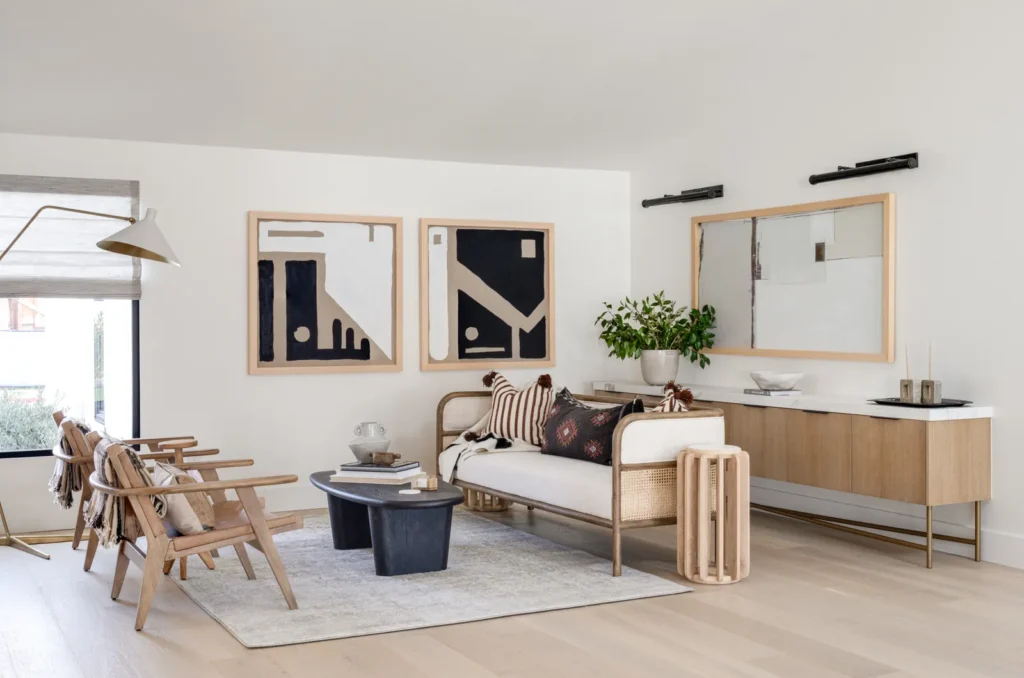
Born from the Nordic philosophy of hygge (coziness) and lagom (just the right amount), Scandinavian interior decorating style is the world’s most widely adopted approach to minimalist living. Its core principle: make every object both beautiful and useful. Clutter is the enemy; quality craftsmanship is the goal.
Picture high-pile rugs and natural white oak floors, crisp linen bedding in cool gray-green tones, and carefully curated objects that earn their place in the room. Natural materials in design, especially wood, wool, and ceramic, are essential. The palette remains cool and neutral, punctuated by the warmth of candlelight and soft textiles.
Scandinavian design pairs beautifully with other styles. Try combining it with Japanese minimalism (see Japandi, below) or grounding its coolness with a modern farmhouse warmth.
Key elements
- Neutral palette
- Natural wood
- Cozy textiles
- Clutter-free
- Functional objects
Japandi
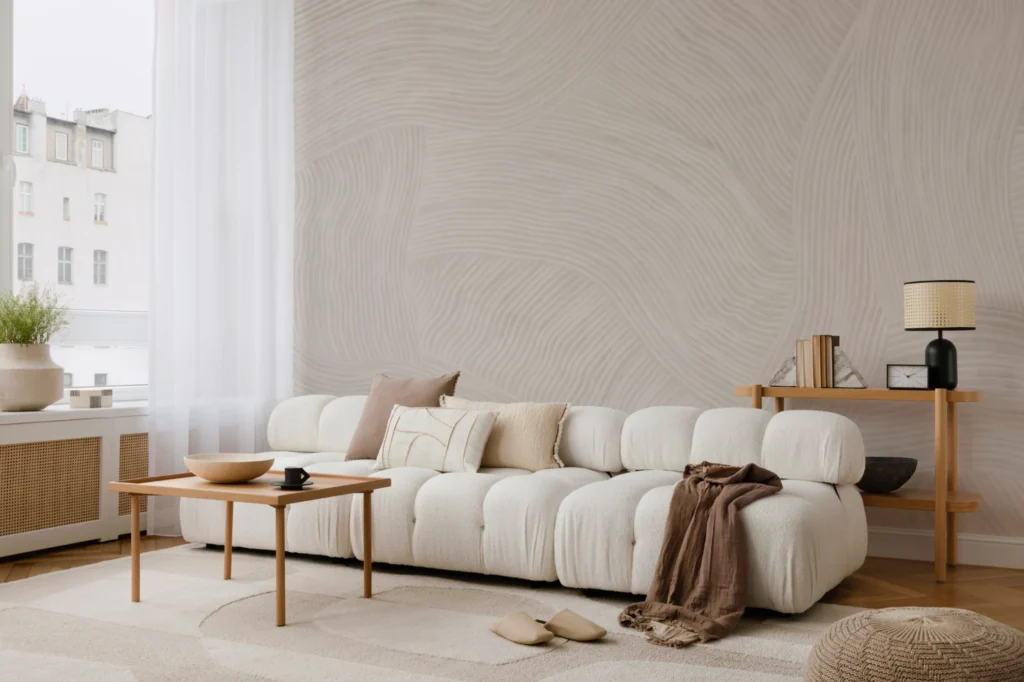
Japandi is the inspired fusion of Scandinavian and Japanese interior design principles, combining the warmth of Nordic coziness with the discipline of Japanese wabi-sabi, a philosophy of finding beauty in imperfection. The result is a deeply serene, grounded aesthetic that has become one of the leading home decor trends of the 2020s.
Low-profile furniture, handmade ceramics with deliberate imperfections, paper lanterns casting soft light, and natural materials like bamboo and linen all define this look. The color palette for home leans heavily on warm off-whites, muted sage, charcoal, and clay nothing jarring, everything intentional. Negative space is as important as the objects themselves.
Key elements
- Low furniture
- Wabi-sabi
- Paper lanterns
- Imperfect ceramics
- Negative space
Minimalist
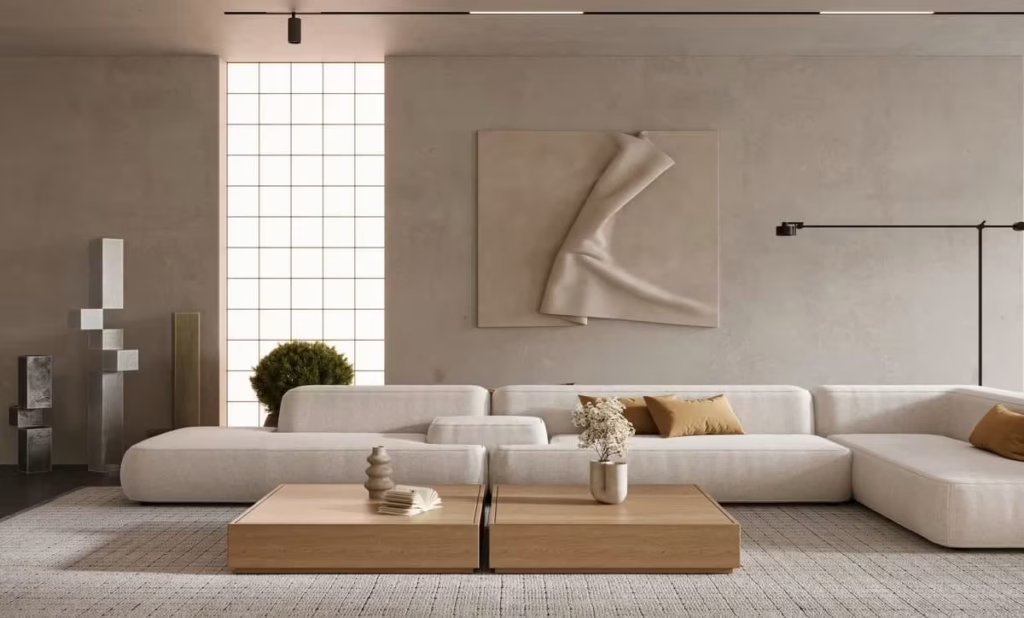
Minimalism is the art of intentional subtraction. Where other furniture design styles celebrate accumulation, minimalism asks: what can be removed? The goal is a space stripped to its essential elements, one where light, proportion, and material quality do the heavy lifting.
Minimalist interiors rely on contrast: a single bold artwork against a white wall, a sleek concrete floor beneath a soft wool rug, warm light against cool plaster. The palette is typically monochromatic whites, creams, and soft grays with occasional muted accent tones. Every object must earn its place.
This style pairs beautifully with biophilic design, where the “objects” are living plants and the material is unfinished stone and wood. It also works as the backbone for contemporary home design.
Key elements
- Monochromatic palette
- Negative space
- High-quality materials
- Light & contrast
- Intentional objects
Bohemian
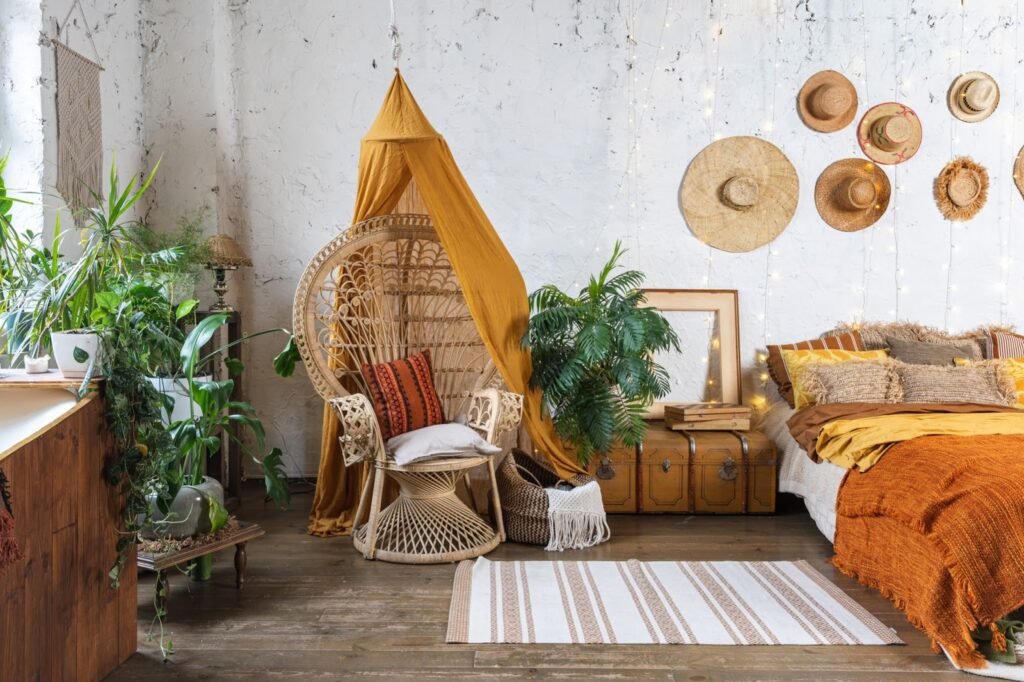
Free-spirited, globally inspired, and unapologetically layered, Bohemian design is the antithesis of minimalism, and it is just as compelling. Bohemian interiors celebrate a collected-over-time look, where every textile, artifact, and piece of furniture tells a story about the person who lives there.
Jewel tones deep emerald, sapphire, ruby, and amethyst dominate the palette, offset by natural textures like rattan, wicker, and seagrass. Layered rugs, macramé wall hangings, vintage kilims, and an abundance of plants contribute to the rich visual tapestry. The eclectic home styling approach of Bohemian design encourages mixing patterns and cultures without apology.
The trick to Boho done well is cohesion through color: pick a dominant palette and let it unify the chaos into something warm and inviting.
Key elements
- Jewel tones
- Layered textiles
- Global artifacts
- Rattan & wicker
- Mixed patterns
Art Deco
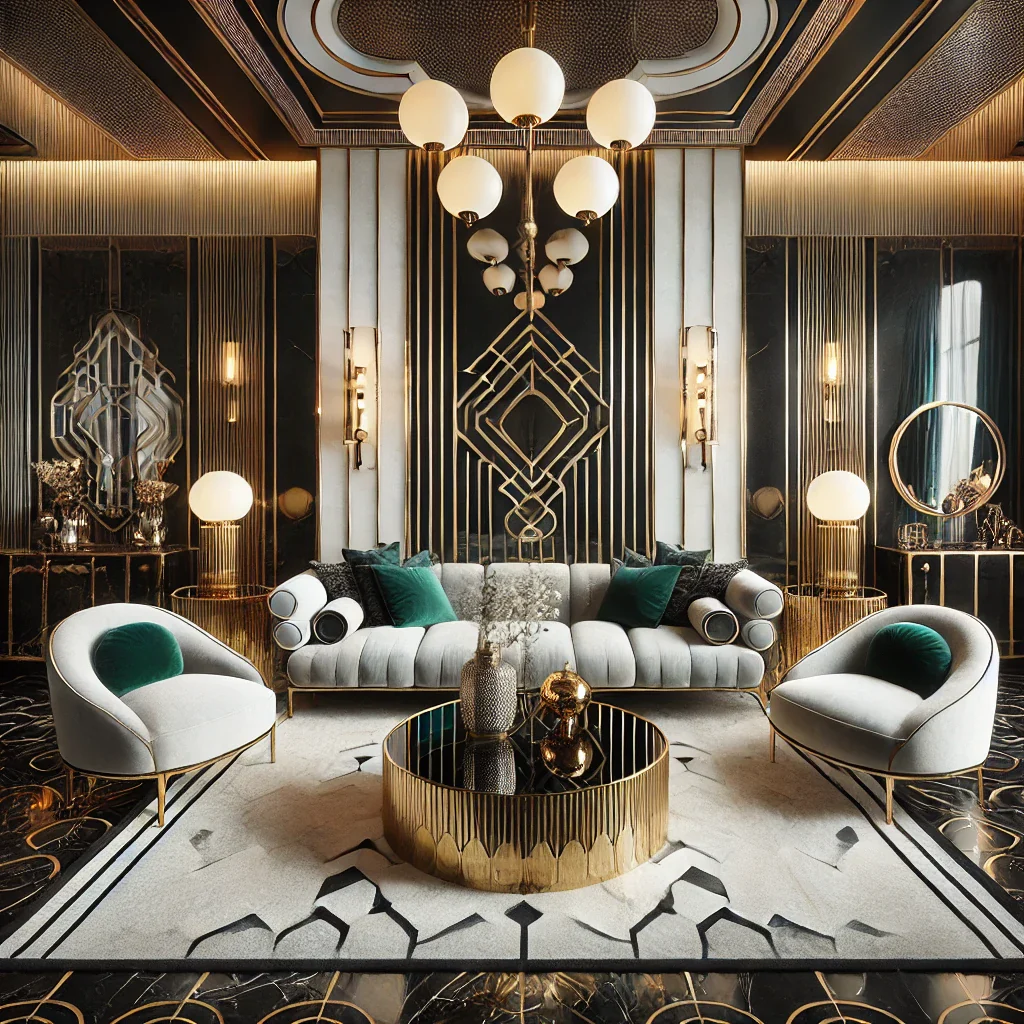
With its roots in the 1920s European glamour, Art Deco is the most theatrical of all interior decorating styles. Born from a postwar desire for luxury and optimism, it combines bold geometric forms sunbursts, chevrons, stepped silhouettes with sumptuous materials like lacquered wood, mirrored glass, marble, and gilded brass.
Modern Art Deco interiors reimagine these principles for contemporary spaces: a mirrored console against a deep emerald wall, a sculptural chandelier above an octagonal dining table, monochromatic black-and-white marble floors with brass inlay. This is modern home aesthetics at its most opulent.
Art Deco pairs particularly well with the Regency design style, which shares its love of ornate architectural details and gilded accents.
Key elements
- Geometric forms
- Lacquer & mirrored glass
- Gilded accents
- Marble
- Bold symmetry
Traditional
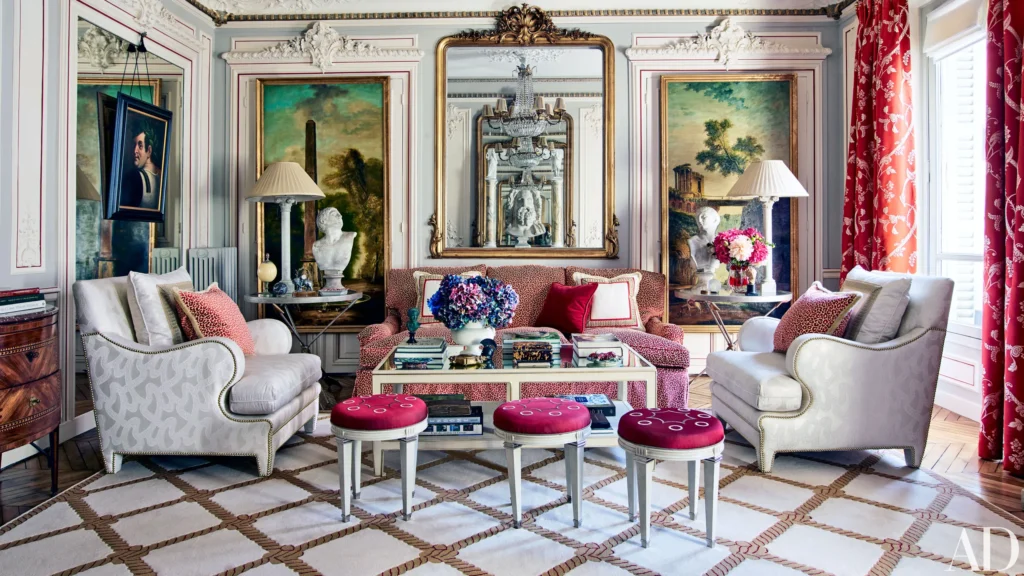
Traditional interior design draws from the great European decorating traditions, 18th- and 19th-century English and French styles, and translates them for comfortable, livable homes. This style is characterized by warm symmetry, rich materials, and a sense of enduring permanence. Think paneled mahogany walls, antique furniture with graceful curves, Louis XVI chairs, and 19th-century sconces casting warm amber light.
The secret to making traditional feel fresh, as designer Corey Damen Jenkins demonstrates masterfully, is in the remixing. Pair antique pieces with unexpected colors, update fabric choices, and allow pattern on pattern to create depth. Traditional design forms the backbone of many hybrid styles, including transitional interior design and the Southern Traditional variant, which adds brighter palettes and playful pattern mixing.
Key elements
- Rich wood tones
- Antique furniture
- Symmetrical layouts
- Classic millwork
- Period lighting
Maximalist
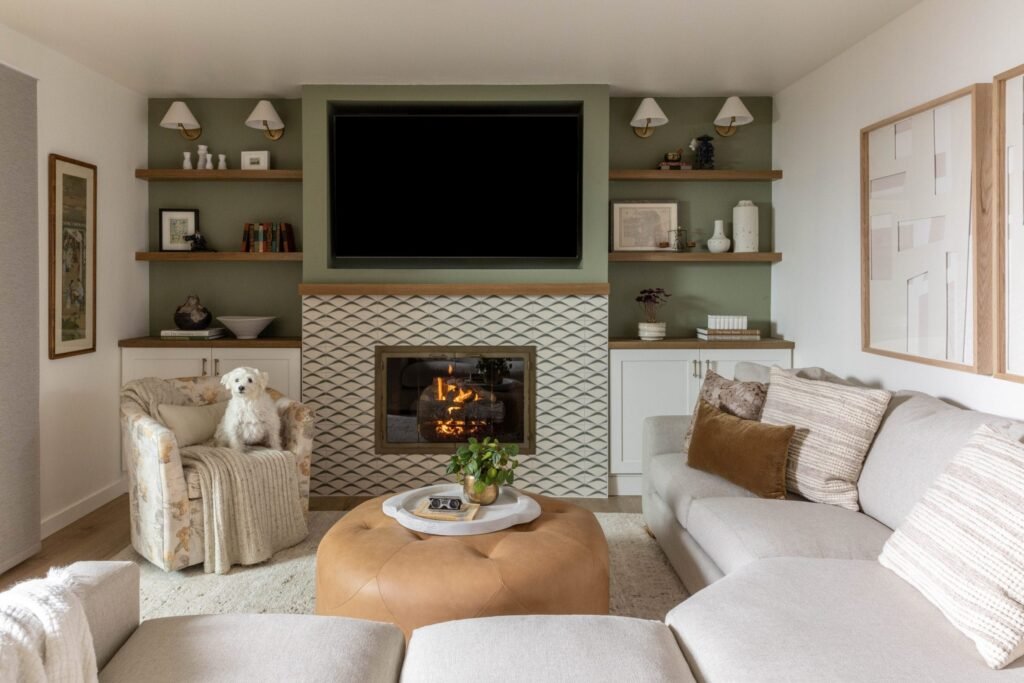
“More is more” is the maximalist’s creed, and when executed with intention, it produces some of the most memorable and joyful interiors in the world. Maximalism embraces an abundance of color, pattern, and texture, layering them in ways that feel curated rather than chaotic.
The key to great maximalism is balance, a unifying color palette that allows disparate patterns and objects to coexist. Bold wallpaper paired with statement upholstery, gallery walls that extend floor to ceiling, collections of ceramics and art that feel personally meaningful. Maximalist living room design ideas often serve as the heart of a home, bursting with personality and warmth.
Think of maximalism not as the absence of rules, but as a different set of rules, ones that celebrate abundance with intention.
Key elements
- Bold color palettes
- Pattern mixing
- Gallery walls
- Layered textures
- Curated collections
Coastal
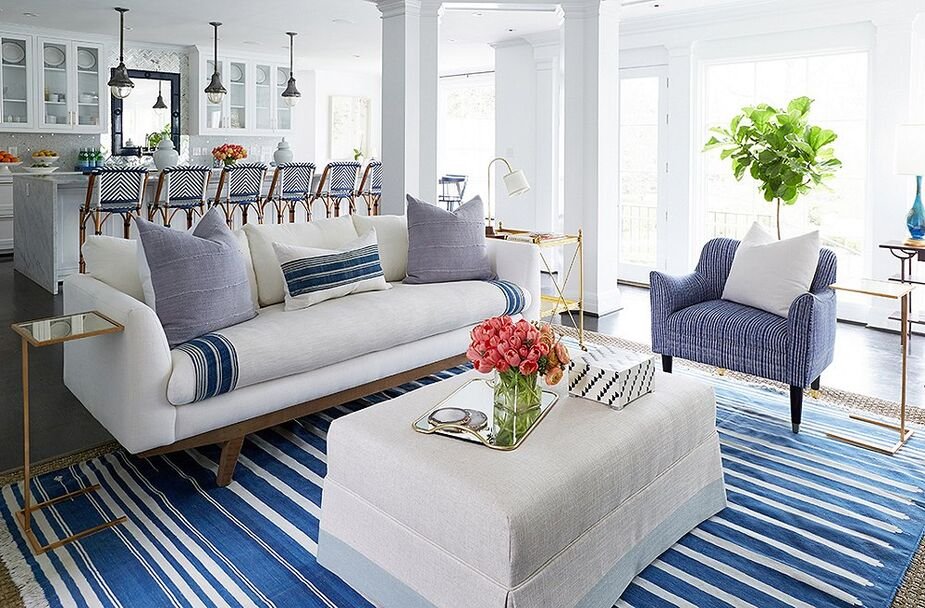
Coastal design distills the feeling of easy shoreline living into an interior language: unhurried, sun-bleached, and endlessly inviting. At its most traditional, coastal style deploys a blue-and-white palette, wicker furniture, rope accents, and wavy or botanical prints to evoke a breezy seaside home.
It’s California evolution California Coastal brings a more tailored, contemporary edge: linen slipcovers over natural wood frames, warm rattan side tables, and a palette expanded to include warm sand, sage green, and driftwood gray. Either way, natural materials in design are non-negotiable: wicker, rattan, jute, and bleached woods give this style its authentic, lived-in quality.
Key elements
- Blue & white palette
- Rattan & wicker
- Botanical prints
- Natural textures
- Relaxed silhouettes
Farmhouse
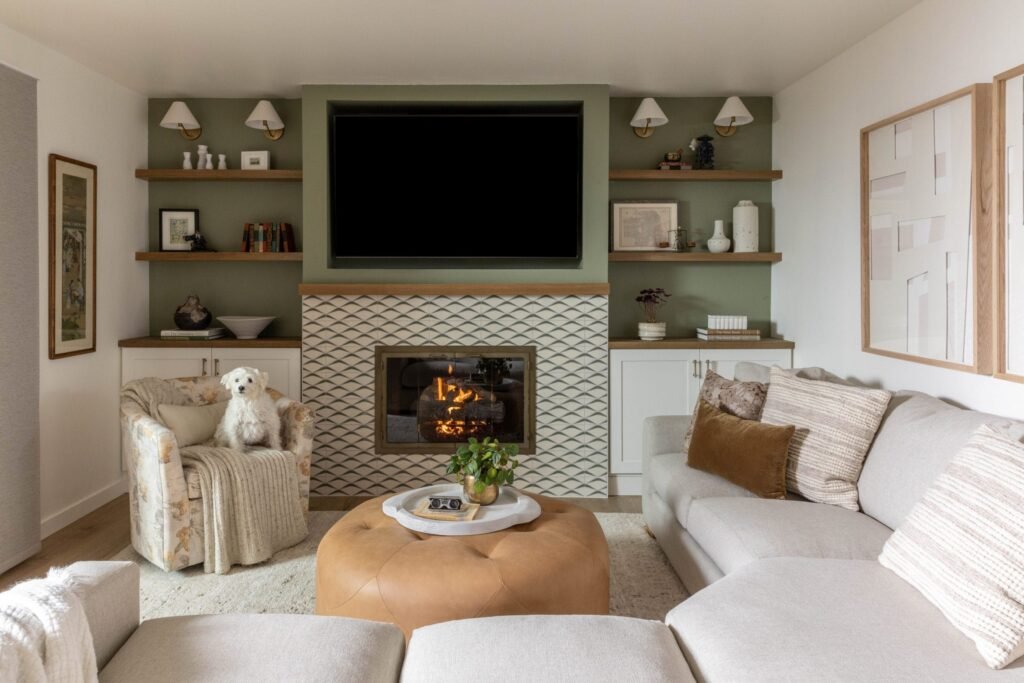
Farmhouse style roots itself in the vernacular architecture of American history, the humble, functional beauty of Colonial, Greek Revival, and Victorian farm buildings. As architect Gil Schafer describes it, the Farmhouse aesthetic offers “a humble, vernacular interpretation” that prioritizes simplicity, honest materials, and a connection to the working landscape.
Shiplap walls, exposed ceiling beams, apron-front sinks, aged wood floors, and open shelving are the style’s most recognized features. The palette is warm and neutral creams, taupes, and soft whites with natural textures providing depth. Its modern sibling, Modern Farmhouse design, blends these rustic elements with cleaner lines and midcentury simplicity, popularized in part by designer Joanna Gaines.
Key elements
- Shiplap & beams
- Aged wood
- Neutral palette
- Open shelving
- Functional simplicity
Industrial / Neo-Industrial
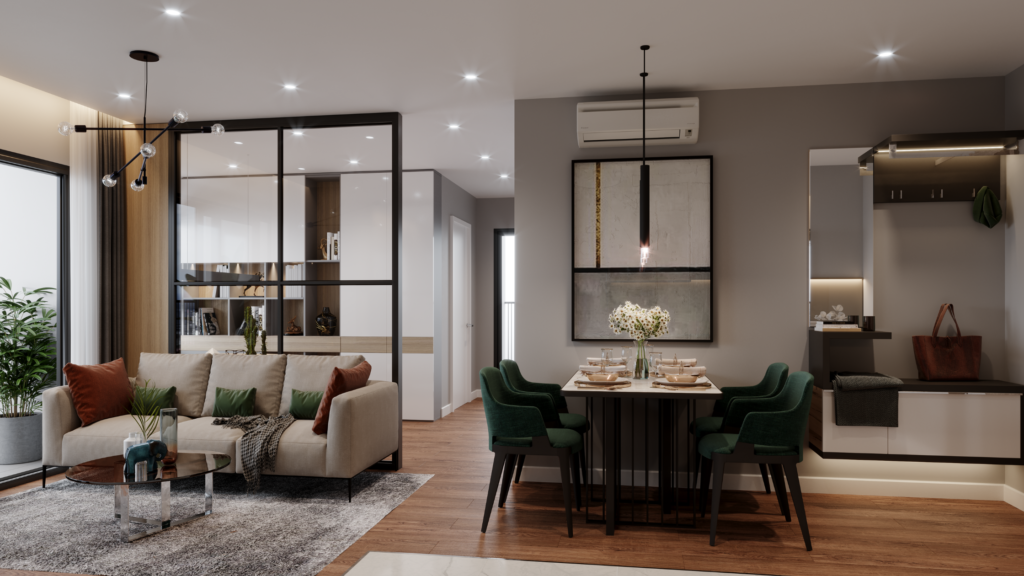
Industrial-style interiors borrow their vocabulary from the factories and warehouses of the late 19th and early 20th centuries: exposed concrete, raw steel, spartan windows, and an honesty about structure and material that feels distinctly urban and modern. Far from cold, a well-executed industrial interior is actually deeply atmospheric, especially when warmed with leather, worn wood, and low ambient lighting.
Neo-industrial design takes these same architectural elements and brings them into residential spaces without compromising liveability. Concrete walls might be softened by plush velvet sofas; steel window frames might frame lush indoor plants. This is one of the most exciting contemporary home design directions for urban apartments and converted loft spaces.
Key elements
- Exposed concrete
- Raw steel
- Spartan windows
- Reclaimed wood
- Utilitarian forms
Mediterranean
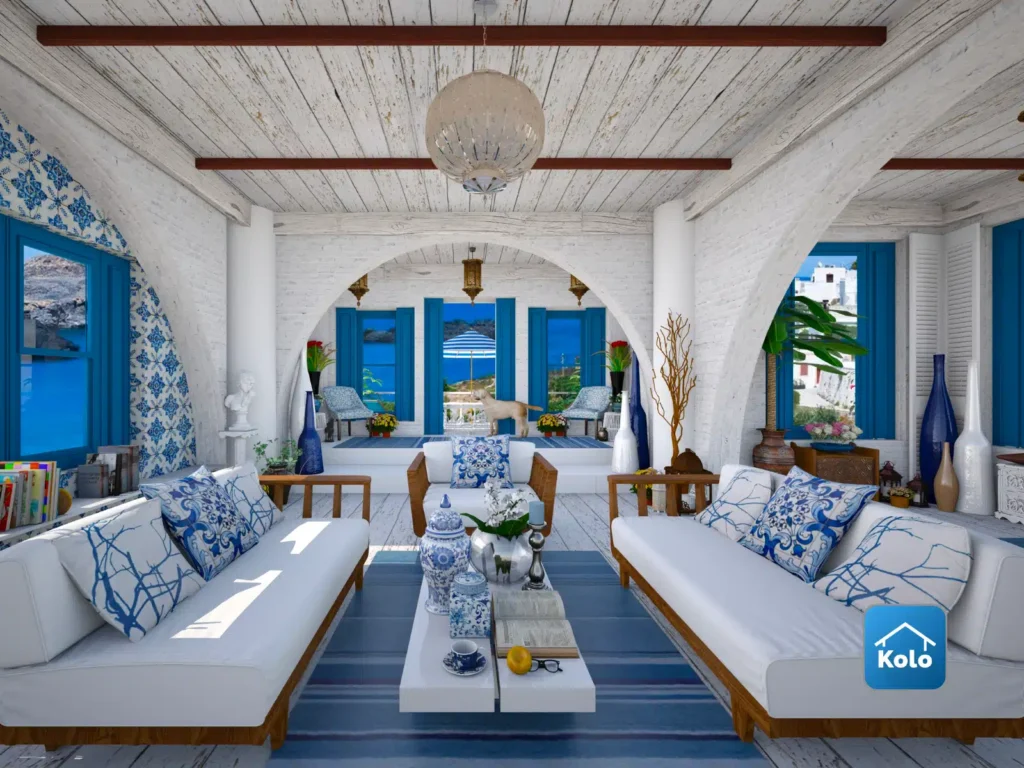
Drawing from the sun-drenched design traditions of Spain, Italy, and France, Mediterranean interiors feel like a permanent vacation. The signature palette anchors on deep blues and crisp whites, but is warmed by terra-cotta tiles, natural stone, aged wood, and the earthy textures of rattan and ceramic.
Arched doorways and windows, wrought iron hardware, decorative tile work, and antique refectory tables all contribute to the style’s unmistakable warmth and character. Mediterranean design is one of the most sensuous of all home decor trends; it engages the eyes with color and the hands with rich, varied textures. Layer in some vintage textile accents and abundant natural greenery to complete the look.
Key elements
- Blue & white
- Terra-cotta tiles
- Arched forms
- Wrought iron
- Natural stone
Transitional
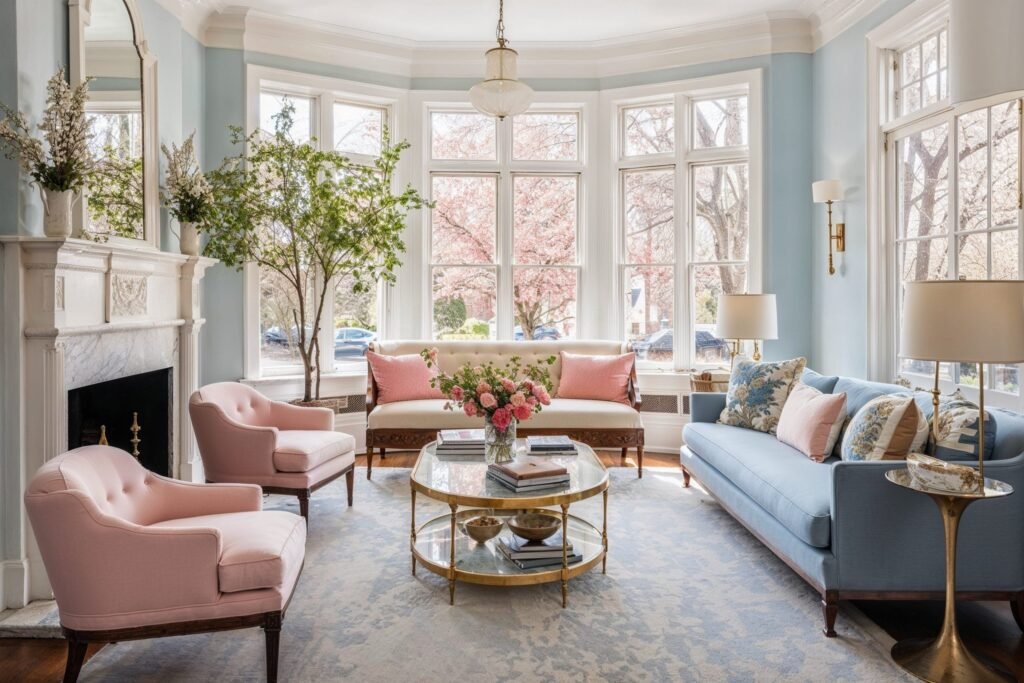
Transitional design is for those who love elements from multiple worlds and refuse to fully commit to just one. It bridges the warmth and history of traditional design with the clean, streamlined sensibility of contemporary modernism, and the result is one of the most livable of all interior decorating styles.
A transitional living room might pair a tufted bench-seat sofa (classic) with a raw stone side table (modern), or set an antique coffee table against a backdrop of 21st-century abstract art. The key is balance: for every traditional element introduced, a modern counterpart keeps the space feeling current. Designer Marie Flanigan is a master of this approach, consistently producing spaces that feel both anchored and effortlessly fresh.
Key elements
- Classic-modern pairing
- Balanced palette
- Mixed eras
- Clean lines
- Timeless silhouettes
Contemporary
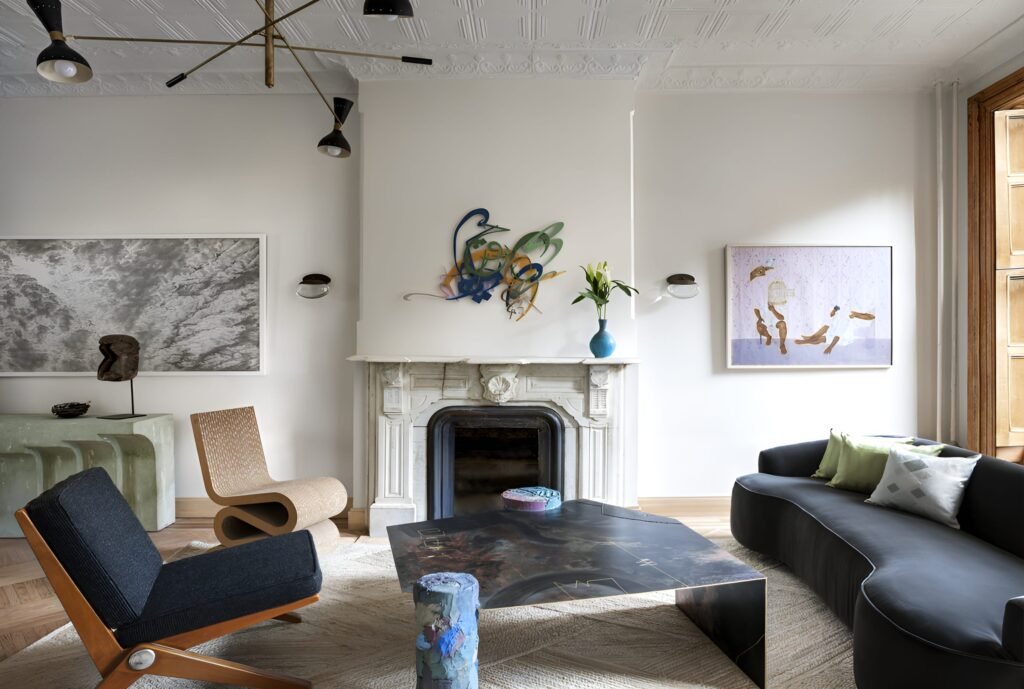
Often confused with “modern” (which refers to a specific 20th-century design movement), contemporary design simply means what is happening right now, the evolving edge of modern home aesthetics at any given moment. In practice, contemporary interiors in the mid-2020s are characterized by bespoke furniture with organic shapes, a sophisticated blending of natural and high-tech materials, and a restrained palette that lets texture carry the visual interest.
Think curved sculptural sofas, terrazzo surfaces, fluted glass, bouclé upholstery, and statement pendant lighting. Contemporary design is endlessly adaptive; it absorbs influences from Japandi, minimalism, and biophilic design and synthesizes them into something of the moment. It’s the style most aligned with current living room design ideas circulating in design publications today.
Key elements
- Organic shapes
- Bouclé & terrazzo
- Statement lighting
- Bespoke furniture
- High-tech details
Eclectic
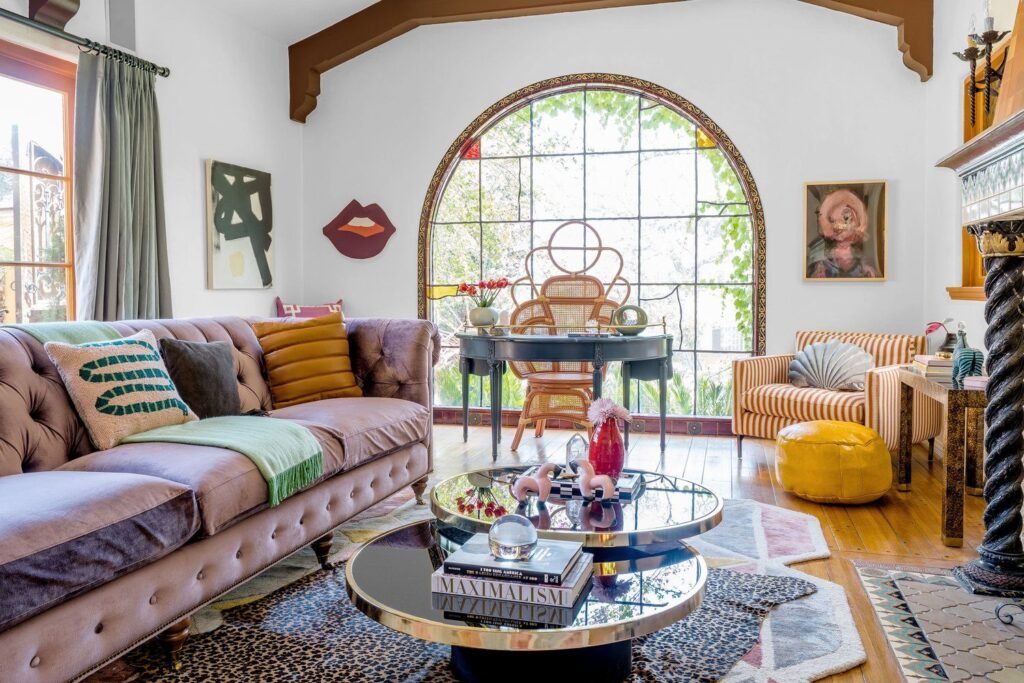
Eclectic design is the most personal of all styles because it is, in essence, your own style. It incorporates elements from multiple periods, geographies, and aesthetics to create a space that feels genuinely curated over time. The room should look as though it assembled itself through a lifetime of meaningful acquisitions, not a single shopping trip.
The difference between eclectic and chaotic lies in cohesion. A consistent color palette for the home is the most effective tool: it acts as an invisible thread that ties disparate objects together. Mix a Victorian side table with a Bauhaus chair and a Moroccan rug; if they share a color story, the combination will sing. As designer Annie Elliott put it, “Maintaining a consistent color palette throughout your house will blur the lines between styles.”
Key elements
- Mixed periods
- Curated collections
- Unified palette
- Global influences
- Personal narrative
“You don’t have to stick to just one style. Even the professionals love mixing styles, old and new.”
Final Thought
Understanding the landscape of interior design styles is not about choosing a box to live inside; it is about developing a visual vocabulary that helps you articulate what you love and why. Whether you are drawn to the meditative quiet of Japandi, the decadent geometry of Art Deco, or the easy warmth of Coastal Farmhouse, the most successful interiors are always the ones that reflect the authentic personality of the people who inhabit them.
The most enduring design advice remains remarkably simple: start with what moves you. Collect images, materials, and objects that give you genuine pleasure. Pay attention to how a room makes you feel, not just how it looks. Then use the frameworks above the palettes, textures, forms, and principles of each style as tools to refine and communicate your instincts.
And remember: the rules exist to be broken thoughtfully. Mix your midcentury sofa with a maximalist gallery wall. Layer a Scandinavian wool throw over a Bohemian kilim. Your home is the one place in the world where you are the final authority on what beautiful means. Use that freedom well.
FAQs
A: In 2026, Japandi leads interior design trends, followed by Contemporary, Transitional, Modern Farmhouse, and California Coastal. More people are also embracing biophilic design to bring calm, nature, and comfort into their homes.
A: Yes, and many beautifully designed homes do exactly that. The secret is a consistent color palette, which helps different styles feel connected and intentional. For example, Scandinavian blends beautifully with Japandi, while Midcentury Modern pairs naturally with Transitional.
A: Modern design comes from the early 20th-century Modernist movement, known for clean lines and simple, uncluttered spaces. Contemporary design reflects what feels current today. In 2026, it blends warmth, organic shapes, and natural textures, creating spaces that feel fresh, inviting, and deeply livable.
A: Several styles truly embrace nature, especially Biophilic, Japandi, Scandinavian, and Farmhouse. Biophilic design goes the deepest, bringing in living plants, raw wood, and stone as part of the space itself. Japandi and Scandinavian styles celebrate simple, imperfect beauty, while Farmhouse feels warm and honest with its aged, reclaimed materials.
A: Start saving images that genuinely inspire you. After a while, clear patterns will appear, whether you love calm neutrals, layered textures, antiques, or clean modern lines. Most people naturally connect with a blend of two or three styles, and that mix often creates the most personal and meaningful spaces.